Log in and enrol
MOOC about MOOCs: design and develop high-quality MOOCs
MOOC about MOOCs: design and develop high-quality MOOCs
The role of MOOCs in teaching, the steps for effective course design, and techniques for creating engaging content.
This course is part of

Course description
What are MOOCs – Massive Open Online Courses?
How can we use them in teaching and learning pathways? How are they designed, and how are all the materials needed for their creation produced?
This course, part of the Smart Learning Design series along with the already published courses “Smart Learning Design – A Visual Method for In-Person and Online Teaching Design” and “Spaces and Technologies for Smart Learning”, aims to answer these questions, starting with an analysis of how MOOCs can serve as effective tools in a blended teaching approach using the Smart Learning Design method.
It will explore the fundamental steps for designing an effective online teaching and learning pathway: defining the purpose, identifying the main target audience, formulating the Intended Learning Outcomes (ILOs), and selecting methodological approaches and assessment strategies.
The course will also describe the actual content production phase, analyzing the stages and technological tools used for creating materials, with a particular focus on video format.
Finally, it will explore how new technologies, such as Artificial Intelligence, can support teachers and instructional designers in the different stages of MOOC development — from design to actual implementation.
Total workload of the course: 12-15 hours
This MOOC is provided by Politecnico di Milano.
For a wider diffusion of the course, learning materials including texts, infographics, diagrams and videos were translated from Italian to English through Artificial Intelligence software. Therefore they may contain inaccuracies.
This MOOC was produced as part of the Edvance project – Digital Education Hub per la Cultura Digitale Avanzata. The project is funded by the European Union – Next Generation EU, Component 1, Investment 3.4 “Didattica e competenze universitarie avanzate".





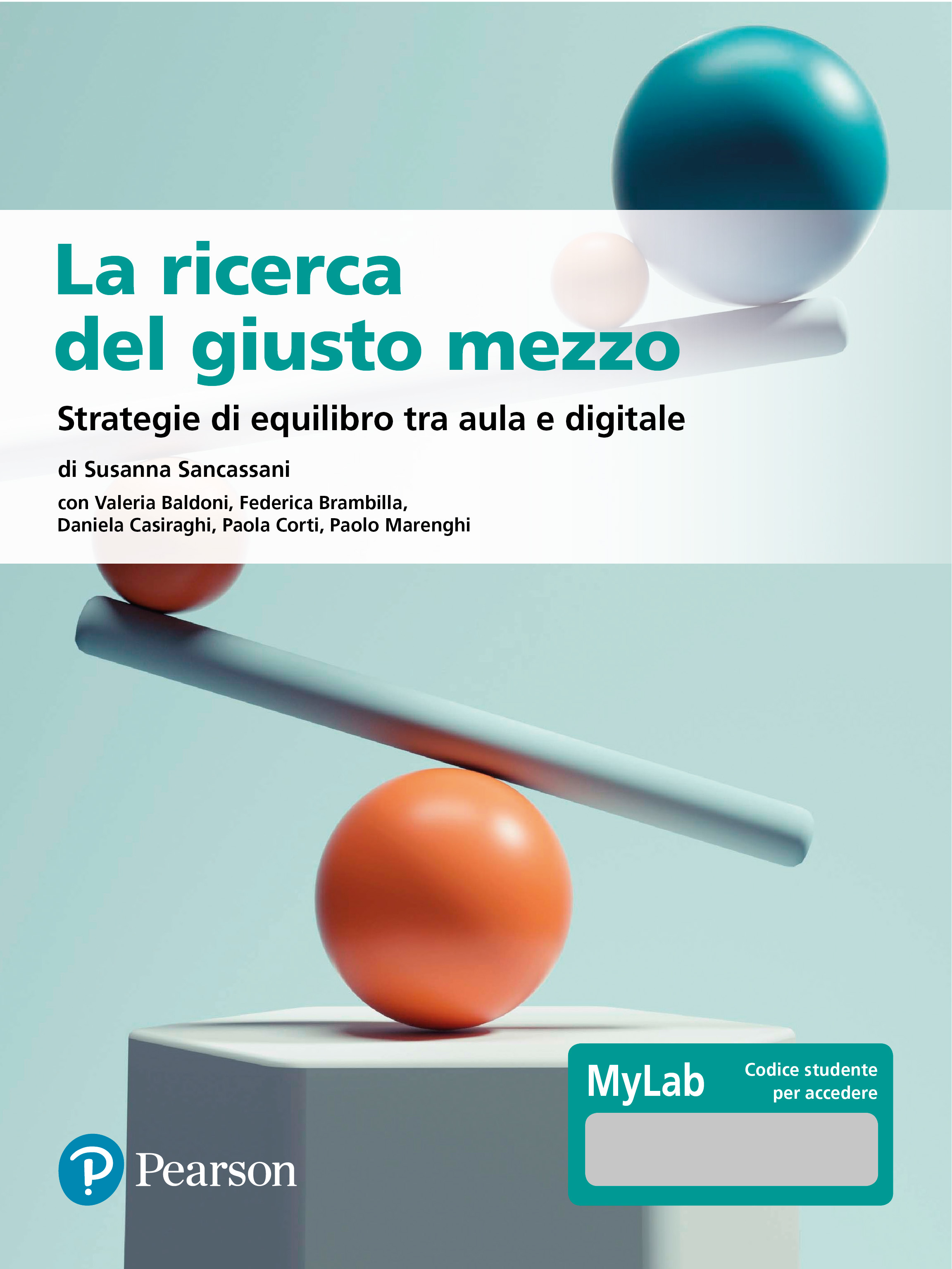

This MOOC is closely integrated with the book “La ricerca del giusto mezzo - Strategie di equilibrio tra aula e digitale” (2023) by Susanna Sancassani with Valeria Baldoni, Federica Brambilla, Daniela Casiraghi, Paola Corti, and Paolo Marenghi, published by Pearson, Milan. All visual materials used in the course are drawn from this publication.
Intended Learning Outcomes
If you actively participate in this course, you will be able to:
-
Understand the role of MOOCs in hybrid teaching contexts, recognizing them as effective tools for gathering low-interactivity content and for the autonomous acquisition of information and concepts;
ESCO: instructional design models -
Understand the different phases that characterize the MOOC creation process (design phase, production phase, and launch phase);
ESCO: design web-based courses -
Clearly define the purpose and specific target of a MOOC by articulating clear and measurable learning outcomes;
ESCO: pedagogy -
Understand the importance of different assessment methods (summative and formative) and evaluate how to apply them effectively within a MOOC, using feedback to improve the learning experience;
ESCO: pedagogy ESCO: assessment processes -
Evaluate the different types of materials that can be included in a MOOC, ensuring visual consistency and accessibility;
ESCO: graphic design -
Identify the various video formats that can be used in MOOCs and understand how the choice of format influences teaching effectiveness depending on specific learning objectives.
ESCO: supervising video editing
Prerequisites
No formal knowledge is required.
Activities
Over and above consulting the content, in the form of videos and other web-based resources, you will have the opportunity to discuss course topics and to share ideas with your peers in the Forum of this MOOC. The forum of this MOOC is freely accessible, and participation is not guided; you can use it to compare yourself with other participants, or to discuss course contents with them.
Assessment
Your final grade for the course will be based on the results of your answers to the assessed quizzes. You have an unlimited number of attempts at each quiz, but you must wait 15 minutes before you can try again. You will have successfully completed the course if you score 60% (or higher) in each one of the assessed quizzes. The maximum score possible for each quiz is given at the beginning of the quiz. You can view your score in the quiz on your last attempt or on the 'Grades' page.
Certificate
You can achieve a certificate in the form of an Open Badge for this course, if you reach at least 60% of the total score in each one of the assessed quizzes and fill in the final survey.
Once you have completed the required tasks, you will be able to access ‘Get the Open Badge’ and start issuing the badge. Instructions on how to access the badge will be sent to your e-mail address.
The Badge does not confer any academic credit, grade or degree.
Information about fees and access to materials
The course is delivered in online mode and is available free of charge.
Course faculty

Susanna Sancassani
Teacher
Managing Director of METID (Methods and Innovative Technologies for Teaching) at Politecnico di Milano, where she teaches Teaching Strategies, supports faculty in adopting innovative approaches, designs and develops digital learning services, and participates in numerous research and training projects. She is also the coordinator of the Edvance project, the first Digital Education Hub for advanced higher education.

Valeria Baldoni
Instructional Designer
Valeria earned her degree in Communication Theory and Technology from the University of Milano-Bicocca. She has been working at METID since 2016 as an instructional designer, also contributing to communication and graphic design.
Contact details
If you have any enquiries about the course or if you need technical assistance please contact pok@polimi.it. For further information, see FAQ page.