Log in and enrol
Comprehensive Energy Solution Planning: Methodology and Open Source Tools
Comprehensive Energy Solution Planning: Methodology and Open Source Tools
From local needs to robust mini-grid design
Course description
This MOOC presents CESP, an interdisciplinary framework for planning sustainable energy-access interventions in rural and off-grid contexts. Learners connect local needs, regulation, resources and demand with technical and business-model design, complementary activities and impact analysis, then use two open-source energy modelling tools: RAMP and MicroGridsPy to generate demand scenarios and optimise mini-grid systems.
Total workload of the course: 15 hours
This MOOC is provided by Politecnico di Milano.
This MOOC was produced as part of the Edvance project – Digital Education Hub per la Cultura Digitale Avanzata. The project is funded by the European Union – Next Generation EU, Component 1, Investment 3.4 “Didattica e competenze universitarie avanzate".



Intended Learning Outcomes
At the end of this course, you will be able to:
- Analyse the regulatory, stakeholder and local-needs context of an off-grid energy-access intervention and translate it into planning priorities
ESCO: analyse the context of an organisation ESCO: analyse community needs ESCO: think analytically - Assess local renewable-energy resources and construct time-resolved demand profiles using bottom-up deterministic and stochastic approaches
ESCO: analyse energy consumption ESCO: perform data analysis ESCO: identify energy needs - Compare rural electrification alternatives and formulate a technically sound, least-cost-oriented sizing problem for mini-grid components
ESCO: perform energy simulations ESCO: evaluate project plans ESCO: provide cost benefit analysis reports - Design a context-appropriate business model and complementary activities that support financial viability, productive uses and long-term sustainability
ESCO: develop business plans ESCO: assess financial viability ESCO: analyse business model ESCO: perform project management - Structure an impact-analysis framework using result chains, theory of change, indicators and multi-criteria decision support
ESCO: assess environmental impact ESCO: think critically ESCO: track key performance indicators ESCO: types of evaluation - Use RAMP and MicroGridsPy workflows to generate demand scenarios, configure multi-year and stochastic mini-grid analyses, and interpret planning trade-offs
ESCO: perform energy simulations ESCO: perform data analysis ESCO: using digital tools for collaboration, content creation and problem solving ESCO: mathematical modelling ESCO: inspect data
Prerequisites
Basic prior knowledge of energy systems, energy engineering, or a related technical field is recommended. Familiarity with fundamental concepts of electricity, energy demand, renewable energy technologies, and basic quantitative analysis will facilitate the understanding of the course. No previous experience with RAMP or MicroGridsPy is required.
Activities
Over and above consulting the content, in the form of videos and other web-based resources, you will have the opportunity to discuss course topics and to share ideas with your peers in the Forum of this MOOC. The forum of this MOOC is freely accessible, and participation is not guided; you can use it to compare yourself with other participants, or to discuss course contents with them.
Section outline
-
-
-
The course opens with the energy-access challenge and the rationale for the CESP framework. Learners examine the regulatory and policy environment, stakeholder roles, local needs and priorities, energy services, the Multi-Tier Framework and the Capability Approach, linking contextual evidence to planning decisions.
Learners assess local renewable-energy resources, with emphasis on solar, wind and small hydropower, and compare field measurements with online databases and tools. The week then translates energy needs into time-resolved load profiles using bottom-up deterministic, load-factor and stochastic approaches.
Learners compare grid extension, stand-alone systems and mini-grids, introduce component sizing and least-cost energy-system optimisation, and connect technical choices with viable delivery models. Ownership and operator models, tariff design, financing, partnerships and the Business Model Canvas are addressed.
The week focuses on the enabling conditions that turn electricity access into sustained development: market access, credit, usable skills, public services and productive uses. Learners then structure monitoring, evaluation and impact analysis through result chains, Theory of Change, indicators, OECD-DAC criteria and multi-criteria decision support.
-
The week turns the CESP framework into hands-on practice with two open-source tools, opening with why dedicated energy-system modelling instruments are the appropriate bridge from framework to implementation within CESP. Learners explore why demand variability matters for robust off-grid system design and how RAMP represents user behaviour stochastically. The workflow covers Monte Carlo daily profiles, seasonal and weekly structure, yearly scenario assembly, appliance-level inputs and interpretation of demand variability and archetypes.
Learners move from modelling concepts to implementation in MicroGridsPy: bottom-up and multi-year representation, linear and stochastic optimisation, objective functions, constraints, technical/economic/environmental inputs and model outputs. A case study is used to compare technology choices, demand growth, staged investment, grid-arrival uncertainty and carbon costs. This post-optimal analysis closes the comprehensive-planning loop opened in Week 1, translating scenario results back into design and investment decisions.
-
-
Video transcripts Folder
-
Assessment
Your final grade for the course will be based on the results of your answers to the assessed quizzes. You have an unlimited number of attempts at each quiz, but you must wait 15 minutes before you can try again. You will have successfully completed the course if you score 60% (or higher) in each one of the assessed quizzes. The maximum score possible for each quiz is given at the beginning of the quiz. You can view your score in the quiz on your last attempt or on the 'Grades' page.
Certificate
You can achieve a certificate in the form of an Open Badge for this course, if you reach at least 60% of the total score in each one of the assessed quizzes and fill in the final survey.
Once you have completed the required tasks, you will be able to access ‘Get the Open Badge’ and start issuing the badge. Instructions on how to access the badge will be sent to your e-mail address.
The Badge does not confer any academic credit, grade or degree.
Information about fees and access to materials
The course is delivered in online mode and is available free of charge.
Course faculty
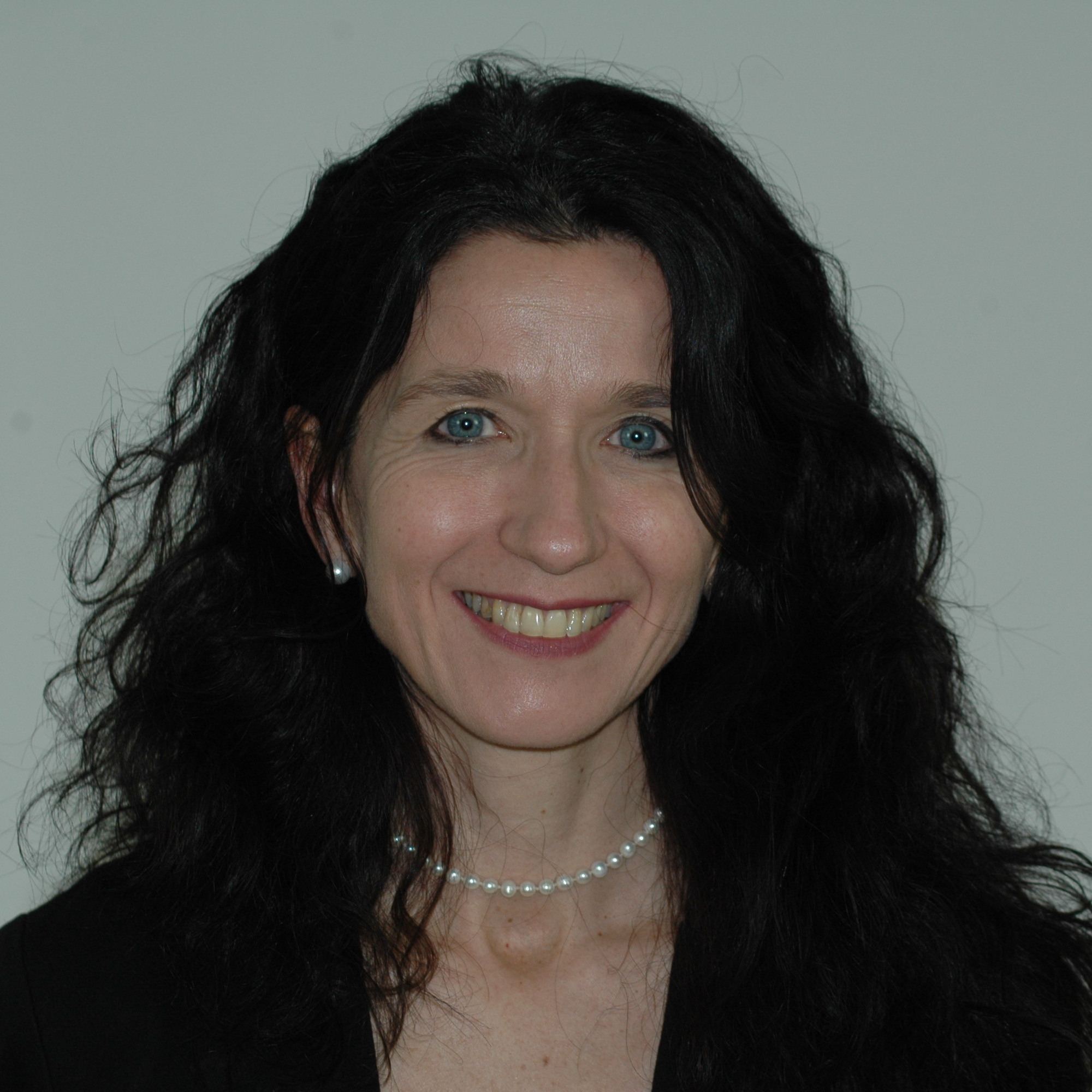
Emanuela Colombo
Teacher
Full Professor at the Department of Energy, Politecnico di Milano, and UNESCO Chair in Energy for Sustainable Development. Her research and teaching focus on energy access, sustainable development, energy planning and the energy-development nexus.

Riccardo Mereu
Teacher
Associate Professor at the Department of Energy, Politecnico di Milano, and co-holder of the UNESCO Chair in Energy for Sustainable Development. His research focuses on numerical modelling and optimisation of energy systems and sustainable energy technologies, with particular attention to off-grid and developing-country contexts.

Nicolò Stevanato
Teacher
Assistant Professor of Energy Planning at the Department of Energy, Politecnico di Milano. His research focuses on energy-system modelling for energy access and development, demand estimation, long-term mini-grid planning and open-source modelling tools.
Alessandro Onori
Teacher
PhD candidate in Energy and Nuclear Science and Technology at Politecnico di Milano. His work focuses on off-grid energy-system modelling and optimisation, including MicroGridsPy development and applications to planning under uncertainty.
Contact details
If you have any enquiries about the course or if you need technical assistance please contact pok@polimi.it. For further information, see FAQ page.