Additional resources
Additional resources
Will digital technologies be powerful allies in the fight against climate change and in promoting equity, or will they act as barriers and make the problem worse?
Course description
This course illustrates the ways in which digital technologies influence our ability to mitigate climate change and promote sustainable development, with particular attention to issues related to equity and governance. It therefore enables participants to understand in which contexts, and under which conditions, digital technologies can become powerful tools for promoting a fair energy transition.
Total workload of the course: 25 hours
This course was translated from "Tecnologie digitali, cambiamento climatico ed equità" and human-reviewed by an ita-eng translator and the professor of the course.
This MOOC was produced as part of the Edvance project – Digital Education Hub per la Cultura Digitale Avanzata. The project is funded by the European Union – Next Generation EU, Component 1, Investment 3.4 “Didattica e competenze universitarie avanzate".



Intended Learning Outcomes
At the end of the course, participants will be able to:
- describe the phenomenon of climate change and the main climate change mitigation options
- describe the main channels through which digitalization impacts: (1) energy demand and energy efficiency, (2) economic productivity and the labor market, (3) equity and governance
- compare intervention scenarios, identifying costs and benefits and the associated trade-offs in terms of energy demand, competitiveness, and equity, and illustrate their implications for equity and governance
Prerequisites
No formal knowledge is required.
Activities
The course includes:
- Lectures
- Multiple-choice quizzes
- Open-ended questions and self-assessment
- Interactive activities
- Required study materials
- In-depth resources
Assessment
Your final grade for the course will be based on the results of your answers to the assessed quizzes. You have an unlimited number of attempts at each quiz, but you must wait 15 minutes before you can try again. You will have successfully completed the course if you score 60% (or higher) in each one of the assessed quizzes. The maximum score possible for each quiz is given at the beginning of the quiz. You can view your score in the quiz on your last attempt or on the 'Grades' page.
Certificate
You can achieve a certificate in the form of an Open Badge for this course, if you reach at least 60% of the total score in each one of the assessed quizzes and fill in the final survey.
Once you have completed the required tasks, you will be able to access ‘Get the Open Badge’ and start issuing the badge. Instructions on how to access the badge will be sent to your e-mail address.
The Badge does not confer any academic credit, grade or degree.
Information about fees and access to materials
The course is delivered in online mode and is available free of charge.
Course faculty
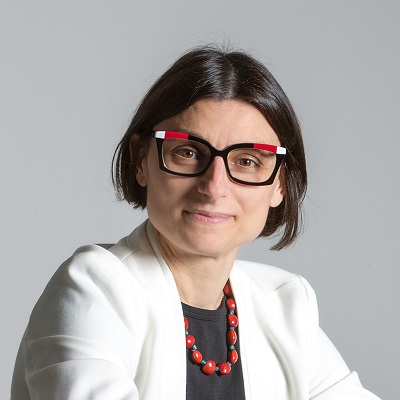
Elena Verdolini
Teacher
Elena is a Professor of Economics at the Department of Law at the University of Brescia and a Senior Scientist at the RFF-CMCC European Institute on Economics and the Environment. Her research focuses on climate change, energy, and innovation , with particular interest in the determinants of green technological innovation, the role of digital technologies in the energy transition, and the economic and distributional implications of energy and climate policies.
Elena was a Lead Author of the IPCC Sixth Assessment Report. She is the Principal Investigator of the project 2D4D “Disruptive Digitalization for Decarbonization”, funded by the European Research Council (ERC Starting Grant), and Coordinator of the project AdJUST “Advancing the Understanding of Challenges, Policy Options and Measures to Achieve a Just EU Energy Transition”, funded by Horizon Europe.
Contact details
If you have any enquiries about the course or if you need technical assistance please contact pok@polimi.it. For further information, see FAQ page.