Additional resources
Additional resources
LCA as a Decision-Support Tool in Engineering, Architecture, and Design: Impact Assessment, Sustainable Choices, and Resource Optimization
This course is part of

Course description
In a context of growing environmental challenges, the MOOC explores the application of LCA methodology across various fields of engineering, architecture, and design (construction, waste treatment, manufacturing processes, mechanical engineering, materials, eco-design, packaging, digital technologies, and energy). Through the analysis of case studies, it helps learners understand how to integrate LCA to support decision-making and reduce the environmental impact of products, processes, services, and organizations.The MOOC was developed as part of the activities of the Polimi LCA Network.
Total workload of the course: 10 hours
This MOOC is provided by Politecnico di Milano.
This MOOC was produced as part of the Edvance project – Digital Education Hub per la Cultura Digitale Avanzata. The project is funded by the European Union – Next Generation EU, Component 1, Investment 3.4 “Didattica e competenze universitarie avanzate".





Intended Learning Outcomes
At the end of this course, you will be able to:
- Understand and remember the different sectors in which the LCA methodology can be concretely applied
ESCO: urban sustainability - Know and understand the potential of applying the LCA methodology to identify opportunities for improving the environmental sustainability of projects and processes
ESCO: sustainability consulting ESCO: manage environmental impact of operations - Identify within a project, activity, or organization whether and when the application of the LCA methodology could be useful
ESCO: advice on sustainability solutions - Understand the role of LCA as a widely validated scientific tool for assessing environmental impacts and its potential in supporting decision-making
ESCO: utilise decision support systems - Understand the role of digital technologies in supporting LCA and their potential to overcome some of the methodology’s limitations
ESCO: environmental management monitors ESCO: decision support systems ESCO: use IT tools
Prerequisites
Knowledge of the basic principles of the Life Cycle Thinking approach and the LCA methodology.
Activities
Over and above consulting the content, in the form of videos and other web-based resources, you will have the opportunity to discuss course topics and to share ideas with your peers in the Forum of this MOOC. The forum of this MOOC is freely accessible, and participation is not guided; you can use it to compare yourself with other participants, or to discuss course contents with them.
Assessment
Your final grade for the course will be based on the results of your answers to the assessed quizzes. You have an unlimited number of attempts at each quiz, but you must wait 15 minutes before you can try again. You will have successfully completed the course if you score 60% (or higher) in each one of the assessed quizzes. The maximum score possible for each quiz is given at the beginning of the quiz. You can view your score in the quiz on your last attempt or on the 'Grades' page.
Certificate
You can achieve a certificate in the form of an Open Badge for this course, if you reach at least 60% of the total score in each one of the assessed quizzes and fill in the final survey.
Once you have completed the required tasks, you will be able to access ‘Get the Open Badge’ and start issuing the badge. Instructions on how to access the badge will be sent to your e-mail address.
The Badge does not confer any academic credit, grade or degree.
Information about fees and access to materials
The course is delivered in online mode and is available free of charge.
Course faculty

Elisa Amodeo
Teacher
Environmental engineer, researcher, lecturer, and consultant with over 15 years of experience in environmental sustainability. Since 2008 she has conducted research at Politecnico di Milano, until 2020 at Poliedra and since 2022 at the Manufacturing Group of DIG, focusing on digital and ecological transition in manufacturing and environmental impact assessment. Since 2024 she has been teaching the Agenda 2030 course at LIUC University.
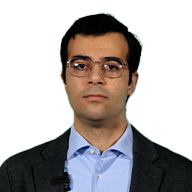
Amir Ardeshiri Lordejani
Teacher
Assistant Professor (RTDa) at the DEIB of Politecnico di Milano, specialized in cold spray technology for additive manufacturing, repair, and advanced material deposition. His expertise spans experimental and numerical approaches, including finite element analysis, as well as sustainability analysis of additive manufacturing processes. He collaborates on Horizon Europe projects (Thermodust, MadeCold, Re-Make), contributing to technological and environmental innovation in the sector.

Javier Babí Almenar
Teacher
Assistant Professor (RTDa) in Urban Ecology at the Ecology Group (DEIB, Politecnico di Milano). He studies cities as ecosystems, aiming to support actions to preserve biodiversity and human well-being. His research focuses on ecosystem accounting and ecological modeling in (peri-)urban contexts. His work integrates approaches from ecology, GIS, Life Cycle Assessment (LCA), and spatial planning.

Gaia Brussa
Teacher
Environmental engineer and, since 2022, research fellow at DICA (Politecnico di Milano) in the AWARE research group (Assessment on WAste and REsources). Since her Master’s thesis, she has focused on LCA applied to renewable energy, particularly offshore wind energy. She also works on other topics related to waste management and sustainability, such as the treatment of waste deriving from the energy transition.
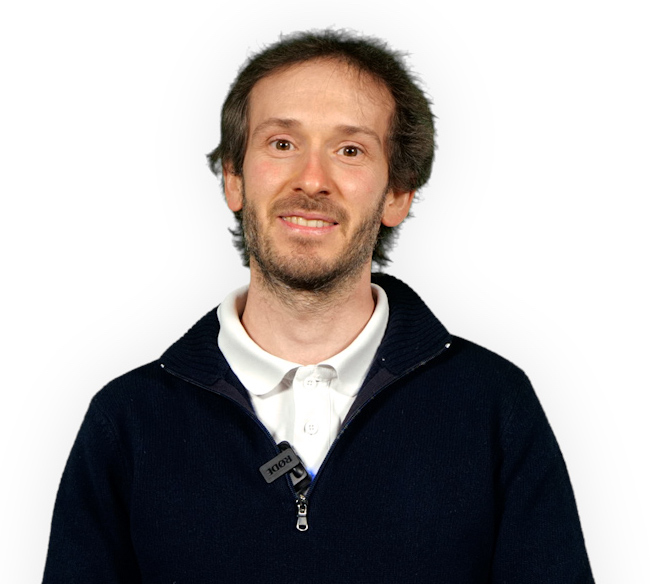
Giovanni Dolci
Teacher
Assistant Professor (RTDa) at DICA, Politecnico di Milano. He has been working at this university since 2014 in the AWARE research group (Assessment on WAste and REsources) and earned his PhD in Environmental and Land Engineering in 2021. His main research topics concern LCA applied to waste treatment and innovative products, as well as the assessment of aerobic/anaerobic degradability of organic substrates (food waste, paper, and bioplastics).
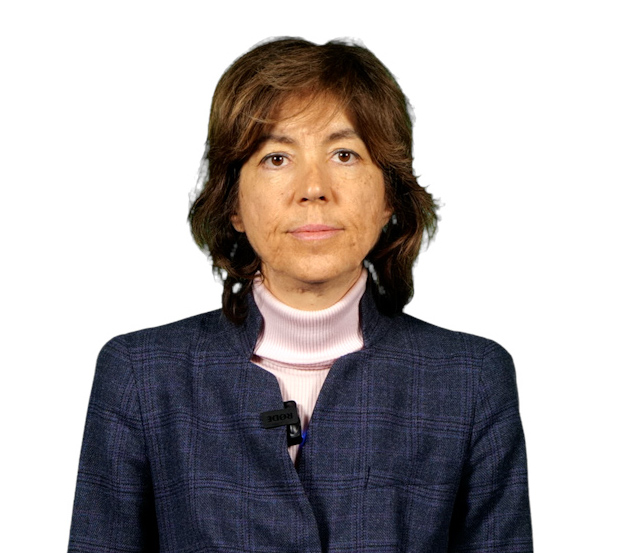
Monica Lavagna
Teacher
Associate Professor of Technological and Environmental Design of Architecture at DABC, Politecnico di Milano. For 25 years her research has focused on sustainability and LCA-based environmental assessment of architectural design at different scales, and for the past 10 years on integrating LCA into national and European building sector policies. She is President of the Italian LCA Network Association, member of the MASE GPP CAM Building Working Group, and national expert in IEA EBC Annex 89.
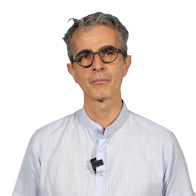
Carlo Proserpio
Teacher
Since 2003 he has been carrying out consultancy and training activities on Design for Environmental Sustainability at the Department of Design of Politecnico di Milano. He specializes in integrating environmental requirements into product and service development, with a focus on Life Cycle Design and LCA. He is Deputy Director of the “Master in Design for Sustainable Transition” for the Polidesign Consortium and member of the ADI Design Index Observatory for lighting design.
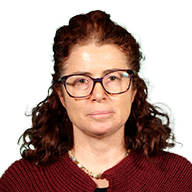
Lucia Rigamonti
Teacher
Associate Professor at DICA, Politecnico di Milano. Her main research and teaching activities concern Life Cycle Thinking methodologies, both in terms of methodological developments and applications for sustainability assessments, particularly in the field of waste treatment, circular economy strategies, and environmental engineering more broadly. She is co-coordinator of the AWARE research group (Assessment on WAste and REsources) and founder of the Polimi LCA Network.

Roberto Rocca
Teacher
Post-doctoral researcher at the Manufacturing Group of Politecnico di Milano. He earned his PhD in Management Engineering in 2023 in the field of industrial architectures for sustainable production in the cosmetics industry. His research areas include LCA methodology, metrics for measuring environmental sustainability performance and impacts in manufacturing, circular economy, and the adoption of digital technologies for environmental sustainability.

Romina Santi
Teacher
Researcher at the CMIC Department of Politecnico di Milano and member of the “Making Materials” research group. She earned her PhD in Design in 2021 at Politecnico di Milano, including a research period at Loughborough Design School (UK). Her research areas include the development of sustainable and circular materials, valorization of waste materials and by-products, material selection and design, and their role in shaping sustainable behaviors, with particular attention to the packaging sector.
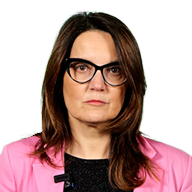
Paola Gallo Stampino
Teacher
Ph.D., Associate Professor at the CMIC Department of Politecnico di Milano and member of the Mat4En2 – Materials for Energy and Environment research group. Her research.
With contributions from:
Carlo Vezzoli, Full Professor of Design at the Politecnico di Milano.
Stefano Puricelli, PhD, currently a research fellow at the Politecnico di Milano within the DICA department, AWARE research group (Assessment on WAste and REsources).
Paula Martina Barbato, PhD student at the Politecnico di Milano within the DICA department, AWARE research group (Assessment on WAste and REsources).
Camilla Tua, Research Associate at the AWARE (Assessment on WAste and REsources) research group, DICA, Politecnico di Milano.
Barbara del Curto, Full Professor at the “Giulio Natta” Department of Chemistry, Materials, and Chemical Engineering, Politecnico di Milano.
Fulvio Seva, Research Fellow at the “Giulio Natta” Department of Chemistry, Materials, and Chemical Engineering, Politecnico di Milano.
Giovanni Dotelli. Full Professor of Materials Science and Technology at the “G. Natta” Department of Chemistry, Materials, and Chemical Engineering, Politecnico di Milano.
Federico Iorio Esposito, Research Fellow in Materials Engineering at the “G. Natta” Department of Chemistry, Materials, and Chemical Engineering, Politecnico di Milano.
Contact details
If you have any enquiries about the course or if you need technical assistance please contact pok@polimi.it. For further information, see FAQ page.