Log in and enrol
Rethinking Artificial Intelligence
Rethinking Artificial Intelligence
An introduction to artificial intelligence, covering algorithms, society and critical awareness. To understand how AI is changing the world — and us along with it.
Course description
This course is an introduction to Artificial Intelligence, with an initial premise of the notion of intelligence and the link between natural and artificial intelligence. Following a classification of the main AI technologies, illustrating their characteristics, functionalities and areas of application through concrete examples – in order to acquire a general but operational level understanding of the topic, there will be a thought-provoking examination of the main risks associated with the adoption of AI – including ethical, social and systemic risks – as well as the opportunities it can offer in terms of innovation and progress for the society. The last part of the course is an overview of the latest governance approaches and the national and international regulatory frameworks on AI, providing the tools necessary to conscientiously navigate the AI regulatory landscape.
Total workload of the course: 25 hours
This course was translated from "Ripensare l'Intelligenza Artificiale" and human-reviewed by an ita-eng translator and the professor of the course.
This MOOC was produced as part of the Edvance project – Digital Education Hub per la Cultura Digitale Avanzata. The project is funded by the European Union – Next Generation EU, Component 1, Investment 3.4 “Didattica e competenze universitarie avanzate".





Intended Learning Outcomes
By actively participating in this MOOC, you will achieve different intended learning outcomes (ILOs).
- Understand and explain the concept of artificial intelligence
- Analyse without bias examples of AI applications, assessing the potential and limitations of the technologies
- Identify and discuss the main risks associated with the use of AI – ethical, social, economic and cognitive risks
- Encourage critical thinking about the link between humankind, technology and society
Skills
Knowledge
Soft Skills
Prerequisites
No formal knowledge is required.
Activities
The course include:
- Reflective activities to stimulate critical thinking through scenario-based learning
- Additional readings
- Quizzes
Section outline
-
-
-
-
-
-
-
-
-
Video transcripts Folder
-
Assessment
Your final grade for the course will be based on the results of your answers to the assessed quizzes. You have an unlimited number of attempts at each quiz, but you must wait 15 minutes before you can try again. You will have successfully completed the course if you score 60% (or higher) in each one of the assessed quizzes. The maximum score possible for each quiz is given at the beginning of the quiz. You can view your score in the quiz on your last attempt or on the 'Grades' page.
Certificate
You can achieve a certificate in the form of an Open Badge for this course, if you reach at least 60% of the total score in each one of the assessed quizzes and fill in the final survey.
Once you have completed the required tasks, you will be able to access ‘Get the Open Badge’ and start issuing the badge. Instructions on how to access the badge will be sent to your e-mail address.
The Badge does not confer any academic credit, grade or degree.
Information about fees and access to materials
The course is delivered in online mode and is available free of charge.
Course faculty
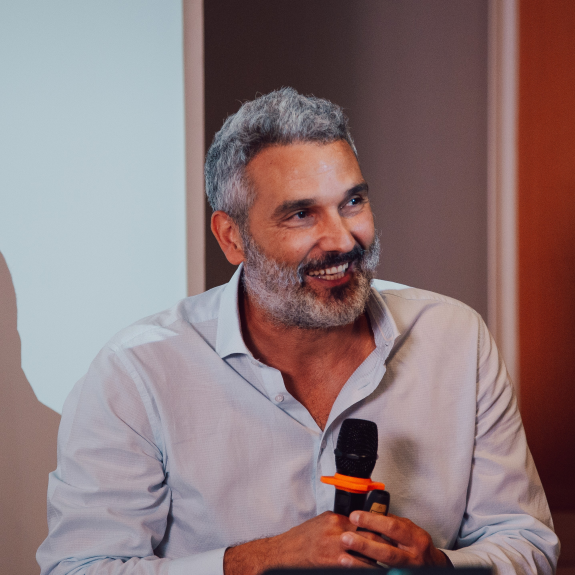
Andrea Loreggia
Teacher
Andrea Loreggia is an Associate Professor at the Università degli Studi di Brescia and cofounder of the Trustworthy AI Lab (TRAIL). His research focuses on Artificial Intelligence, with particular emphasis on computational social choice, machine learning, and ethical systems. His studies aim to develop artificial agents capable of reasoning with preference structures and moral principles. He serves as Associate Editor of AI Magazine (AAAI), contributes to international expert groups, and is coinventor of an IBM patent on machine learning techniques. He earned both his PhD and Master’s degree with honors in Computer Science from the University of Padua.
Contact details
If you have any enquiries about the course or if you need technical assistance please contact pok@polimi.it. For further information, see FAQ page.